Reactive core
Signals, computed values, .ce single-file components, @if / @for templates, lifecycle hooks and a test bed. The glue that keeps game state and screen in sync.
Reactive 2D game engine · built on PixiJS
CanvasEngine is more than a renderer. Describe your game as reactive .ce components, then plug in the systems it needs: tilemaps, cameras, controls, day & night, weather, particles, shadows, sound and UI.
npx degit RSamaium/CanvasEngine/starter my-game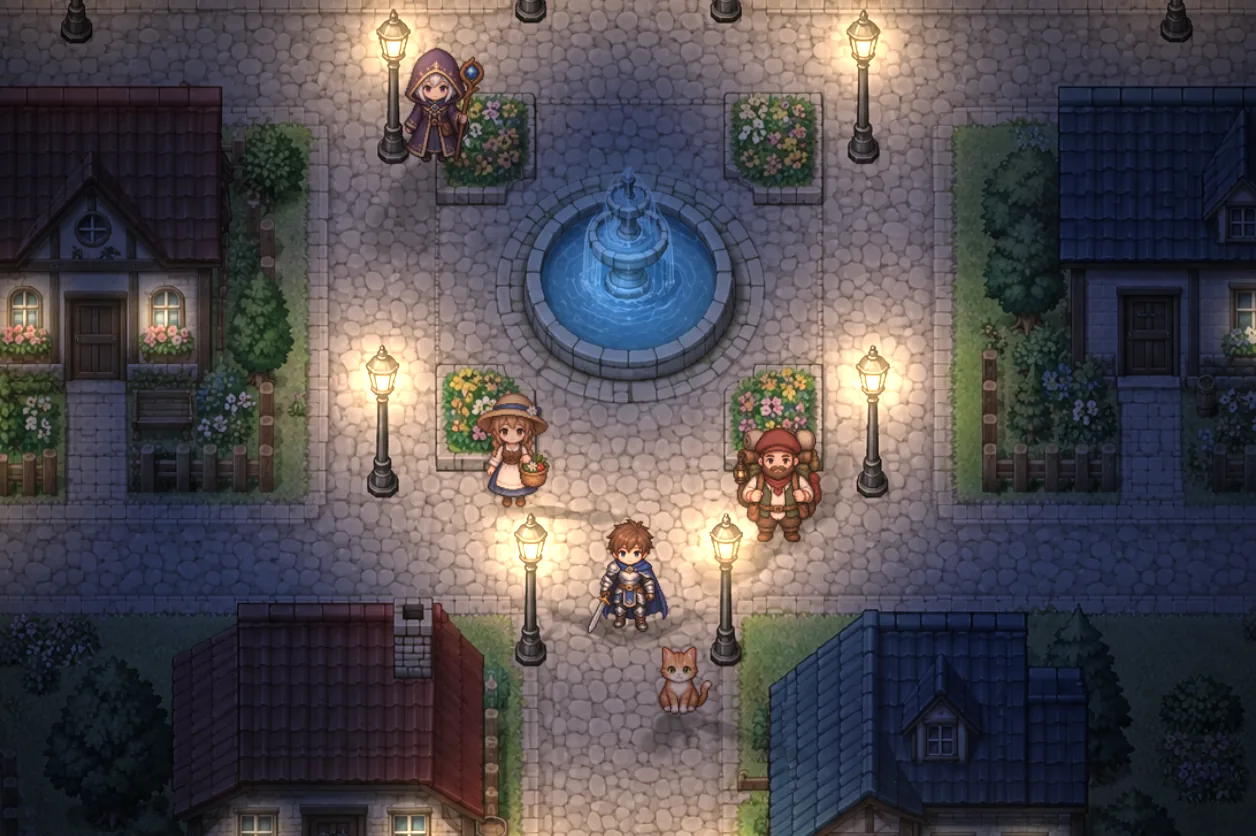
A scene is a component
No render loop to write, no manual syncing between state and pixels. Each system is a component you place in the scene, configured with props that can be plain values or signals. Change the hour, the world follows.
.ce templates with @if / @forcontrols, drag, sound, shake…<Canvas>
<Viewport worldWidth={1920} worldHeight={1440}>
<Sprite image="town.webp" />
<SpriteShadows ambientLight={sun} lights={lamps} />
<Sprite image="hero.png" x={x} y={y}
controls={keys} viewportFollow shadowCaster />
<DayNightCycle time={clock.time} lights={lamps} />
</Viewport>
<Weather preset="autumnGust" />
</Canvas>
<script>
const clock = useGameClock({ time: 18, speed: 10 })
const sun = computed(() => sunShadowAt(clock.time()))
</script>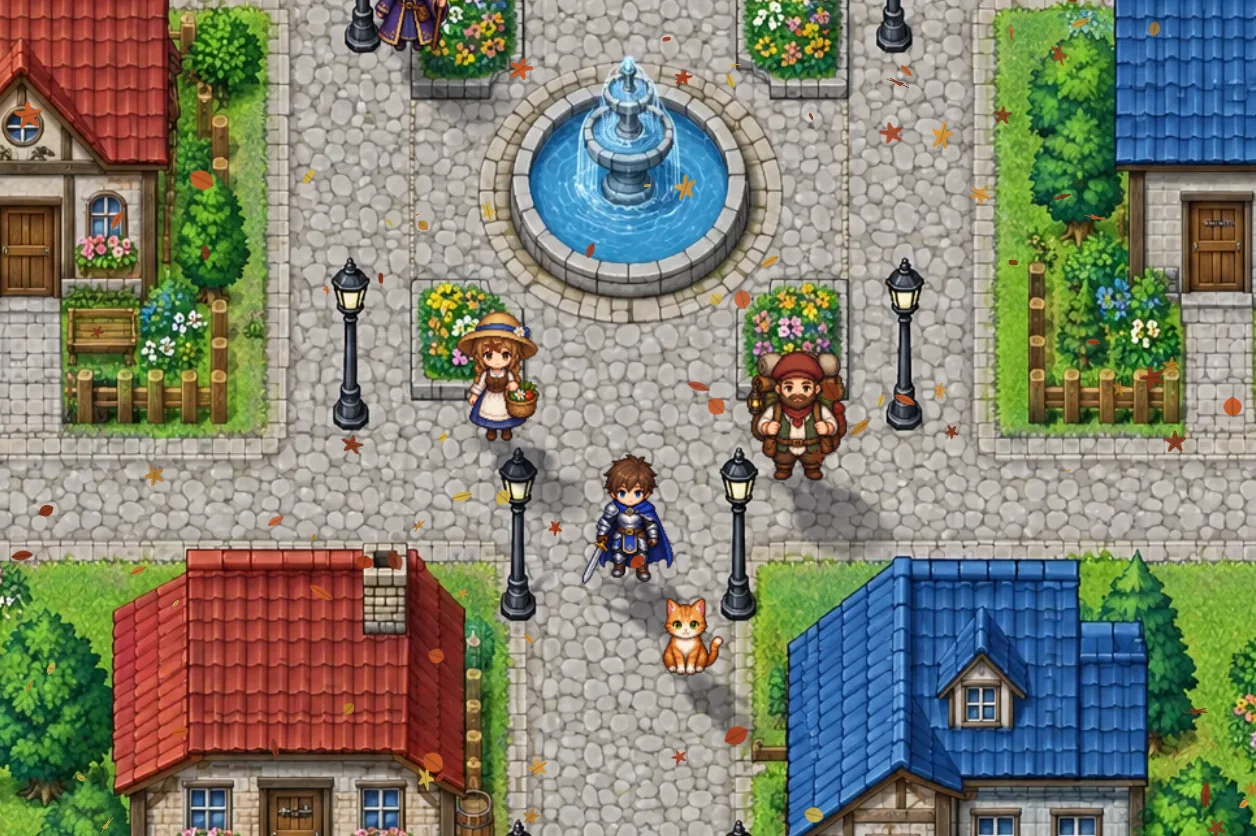
From primitives to game systems
Start low-level with reactive primitives, or build a whole RPG world from presets. Every layer is made of the same reusable components, so your own become first-class too.
Signals, computed values, .ce single-file components, @if / @for templates, lifecycle hooks and a test bed. The glue that keeps game state and screen in sync.
Everything a scene is made of, ready to compose: sprites and spritesheets, a camera viewport, text, graphics, layout, joystick, HTML overlays.
The part other renderers leave to you. Drop a preset in a scene and your world gets weather, light, shadows, particles and life.
Built-in, not bolted on
Every image below is rendered live by CanvasEngine presets, composed in a single scene.
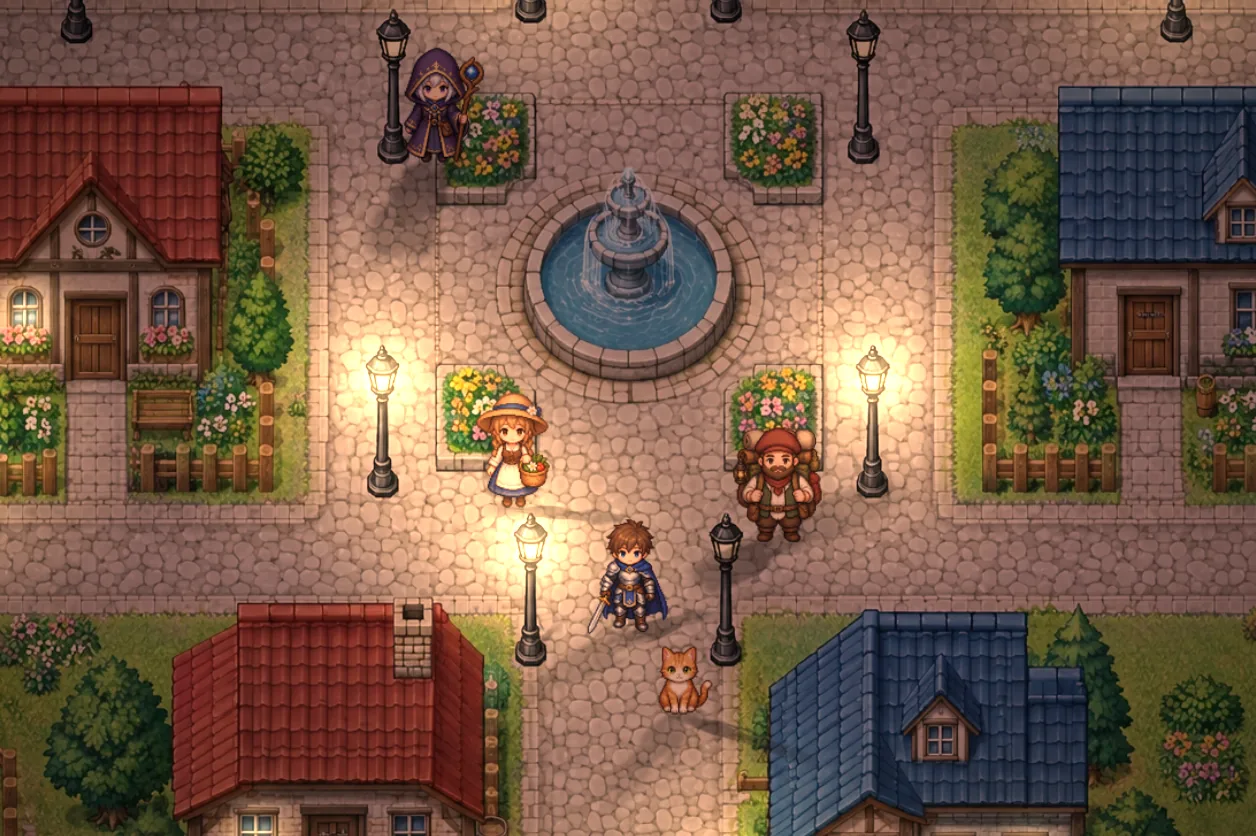
<DayNightCycle>Time of day grades the whole scene. Lamps light up one by one, windows follow their own schedule.
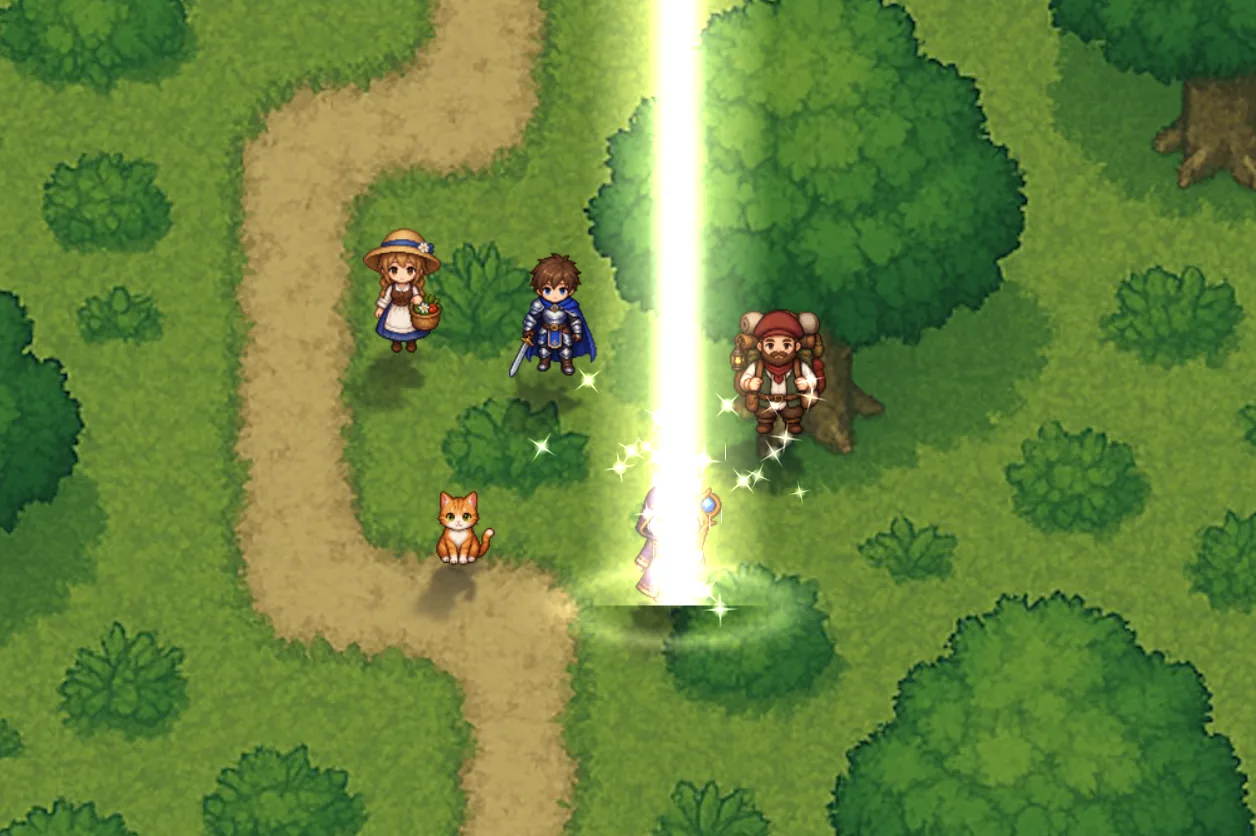
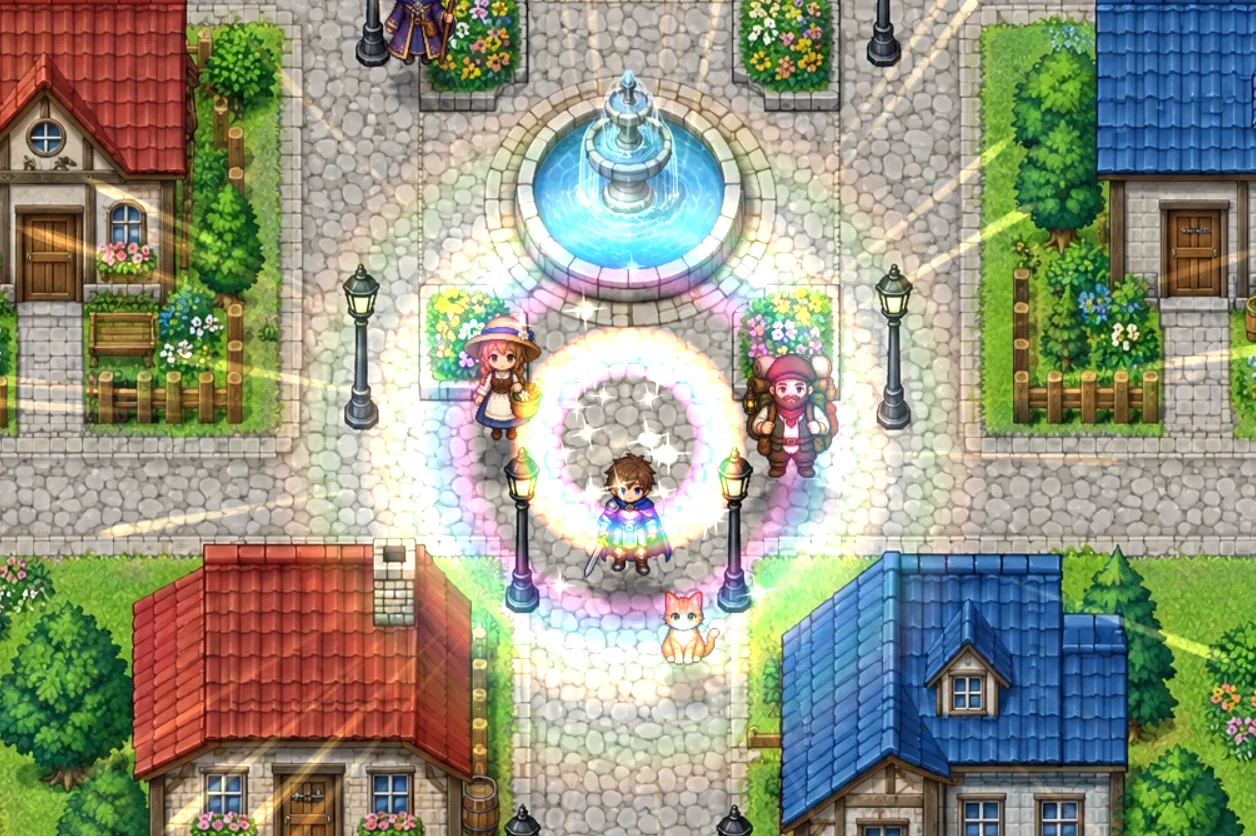
<Fx name="holyPillar">55 presets: slashes, limit breaks, elemental magic, auras, status effects. Recolor them in one prop.
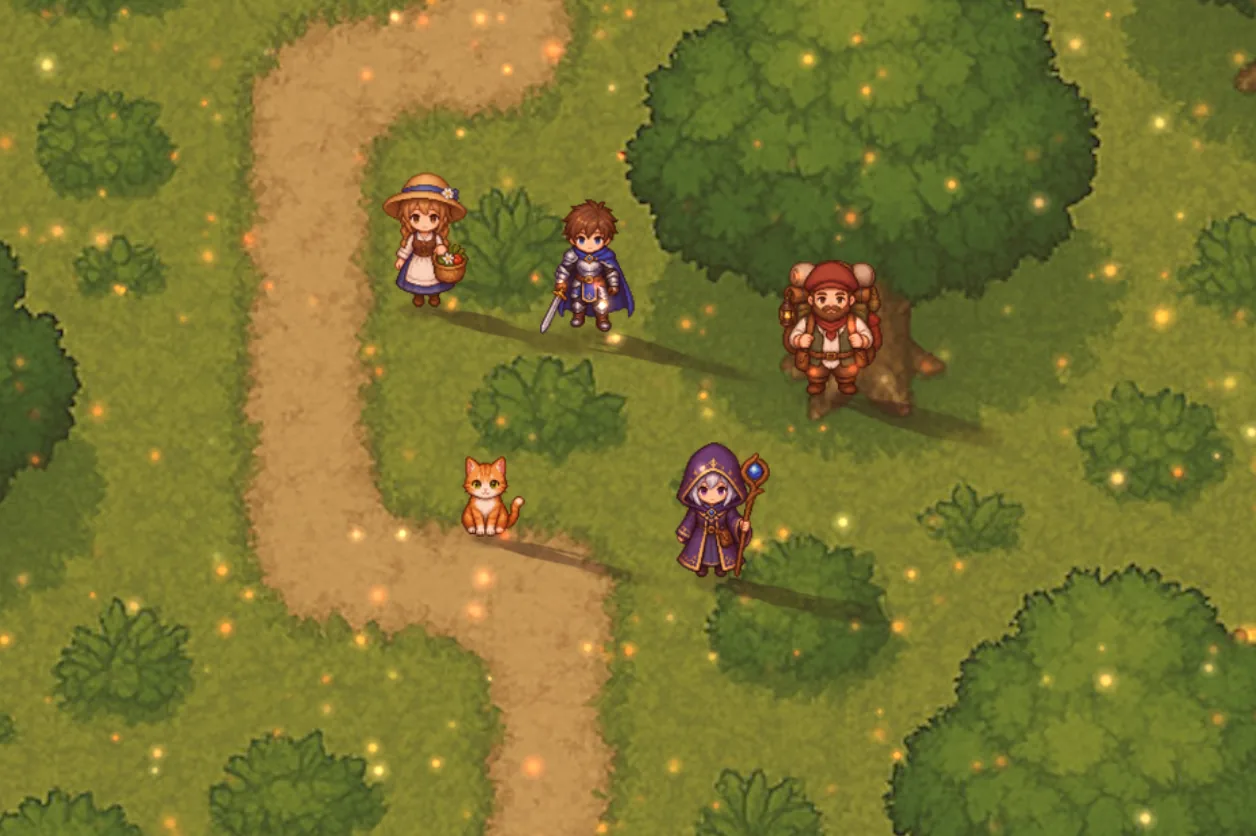
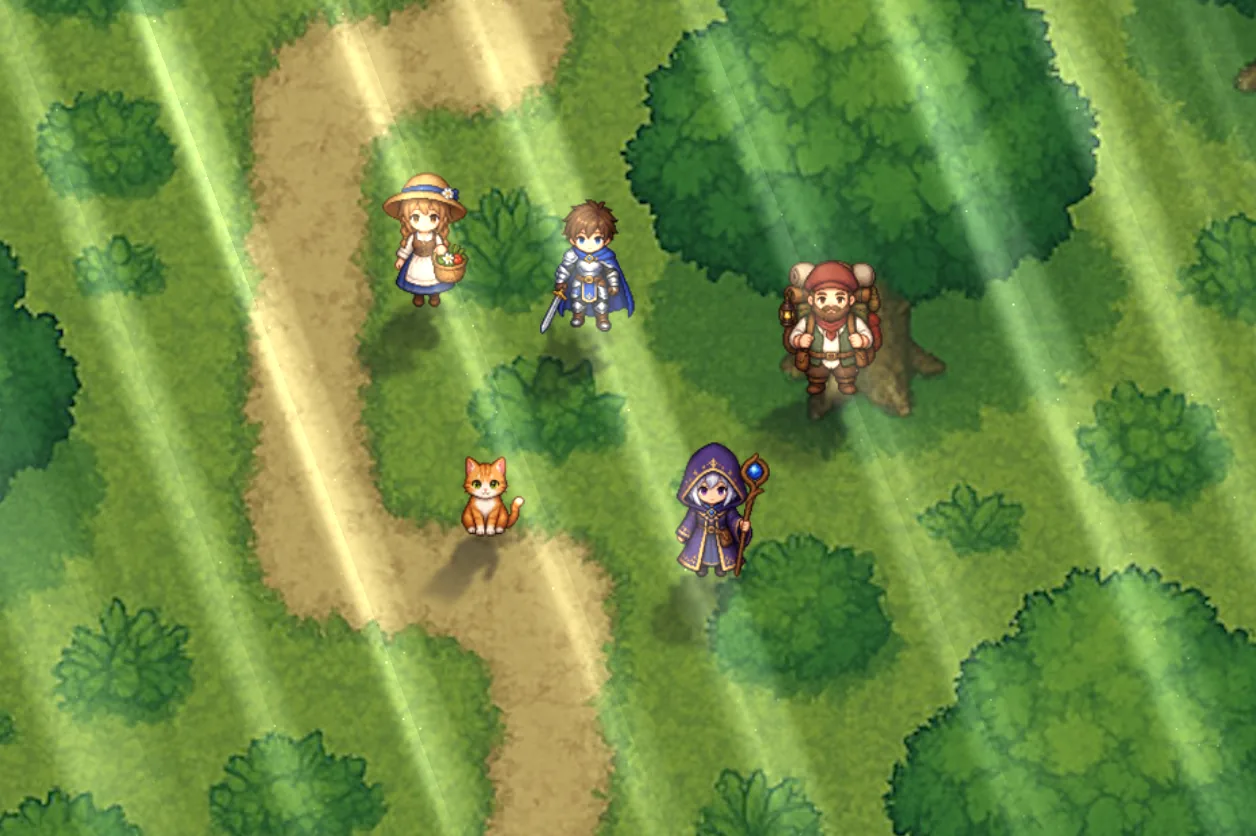
<Weather preset="eruptionEmbers">Rain, snow, fog, clouds, light rays, embers, leaves, fireflies, sandstorms.
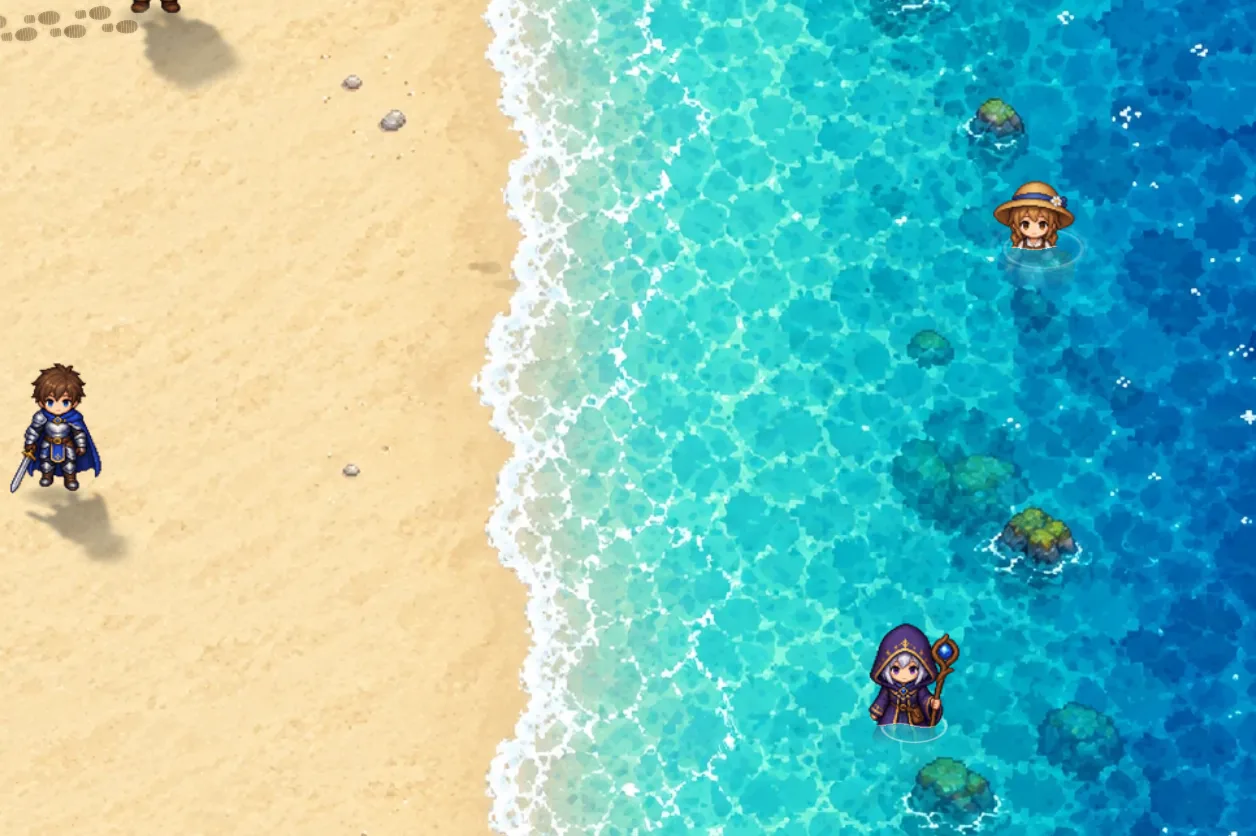
groundCasterCharacters wade into water, disappear into tall grass and leave prints on sand, read straight from the map.
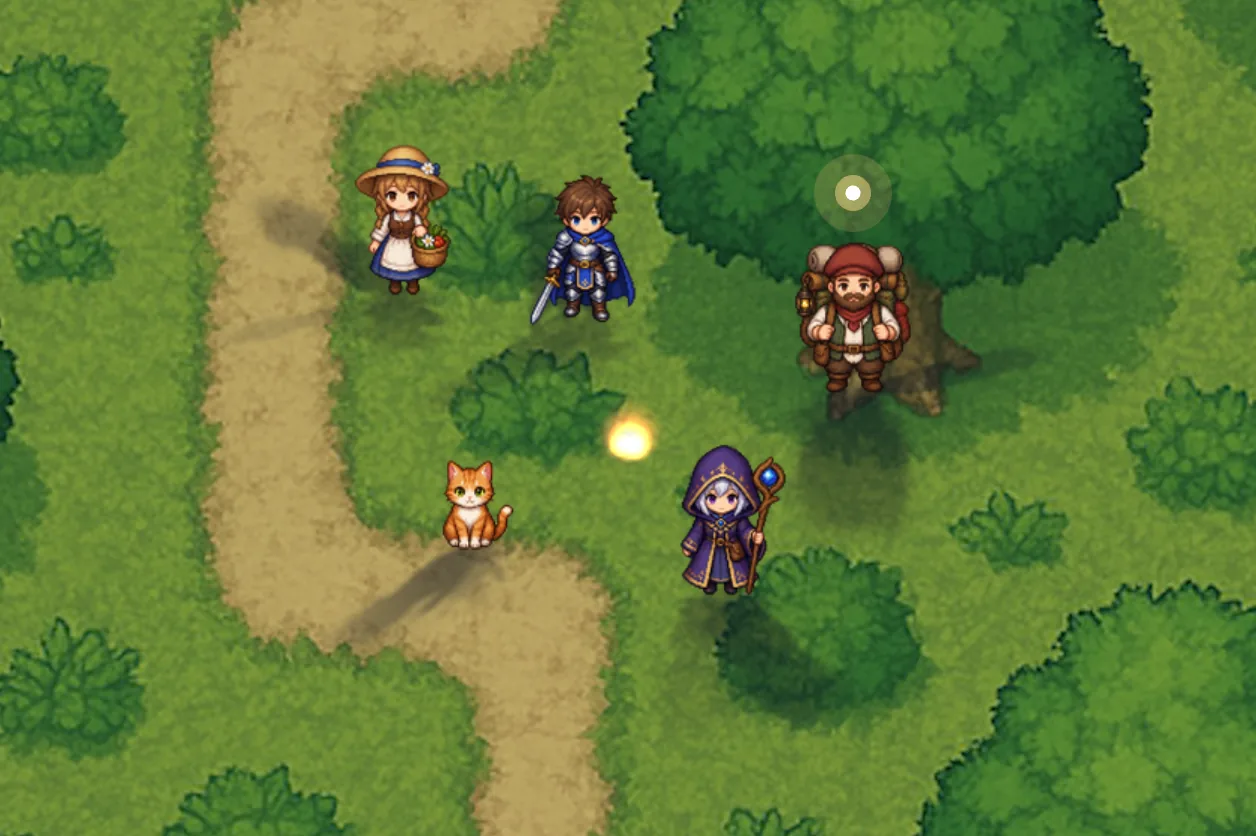
<SpriteShadows>Each sprite casts its real silhouette away from every light: sun, torches, street lamps.
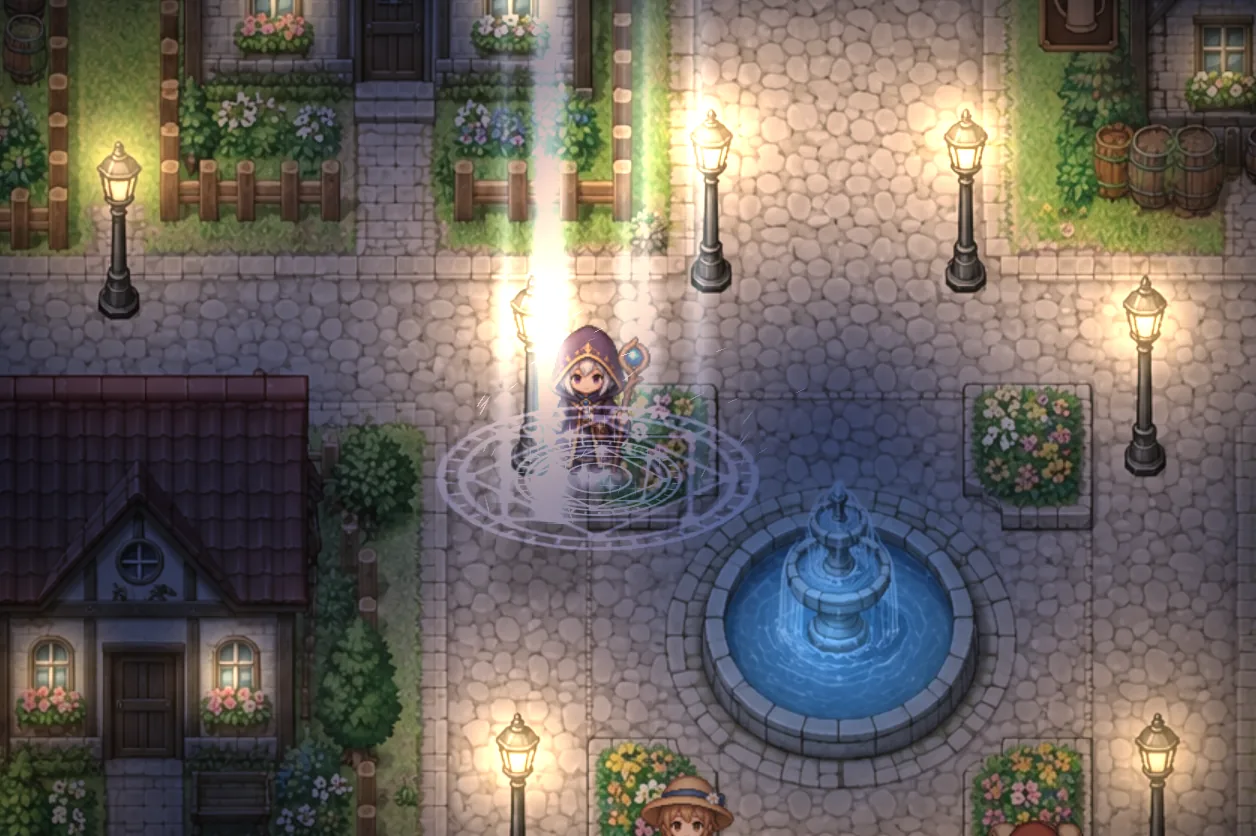
<Fx name="summonSigil">Effects and lighting compose: a summoning circle glowing in a sleeping town.

<Weather effect="cloud">Fluffy cumulus seen from above, with their shadows sliding over the ground.
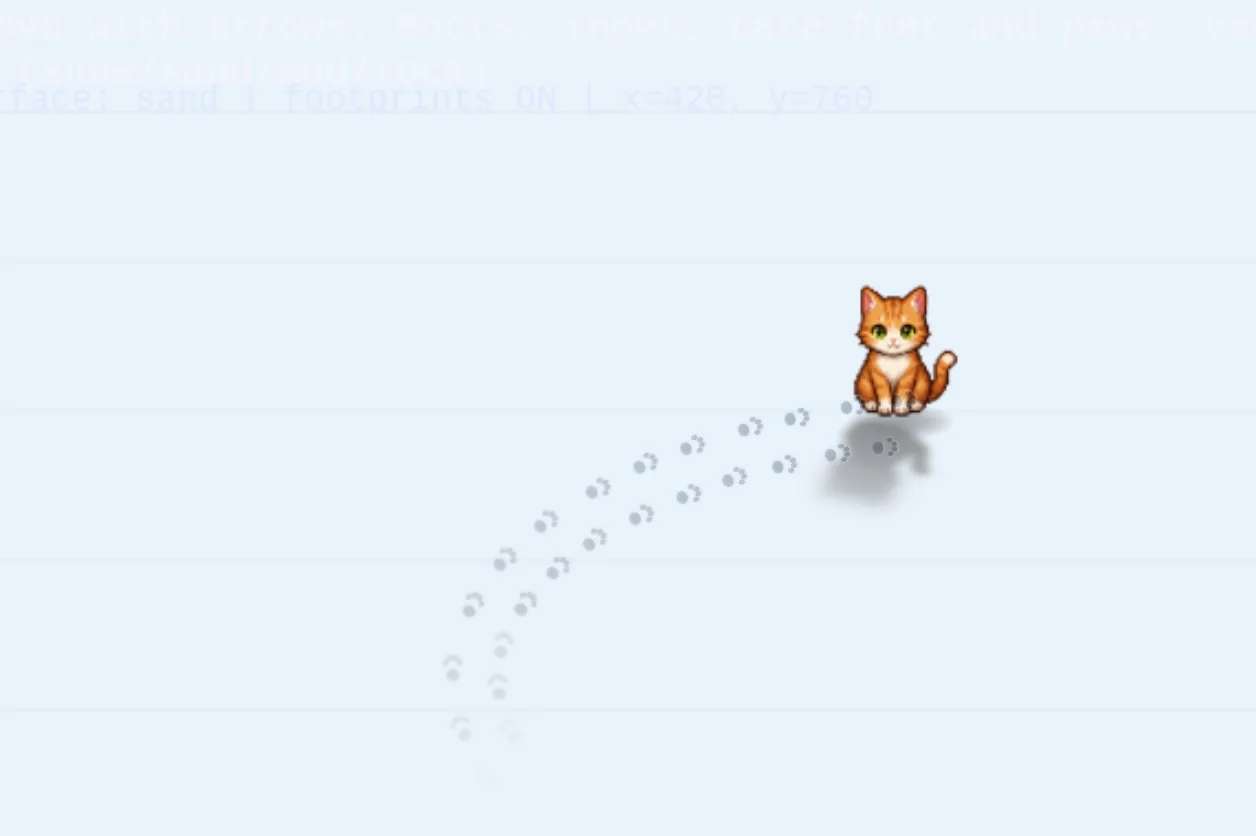
footprintCasterBoots, bare feet, paws and hooves that sink into snow, sand and mud, then slowly fade.
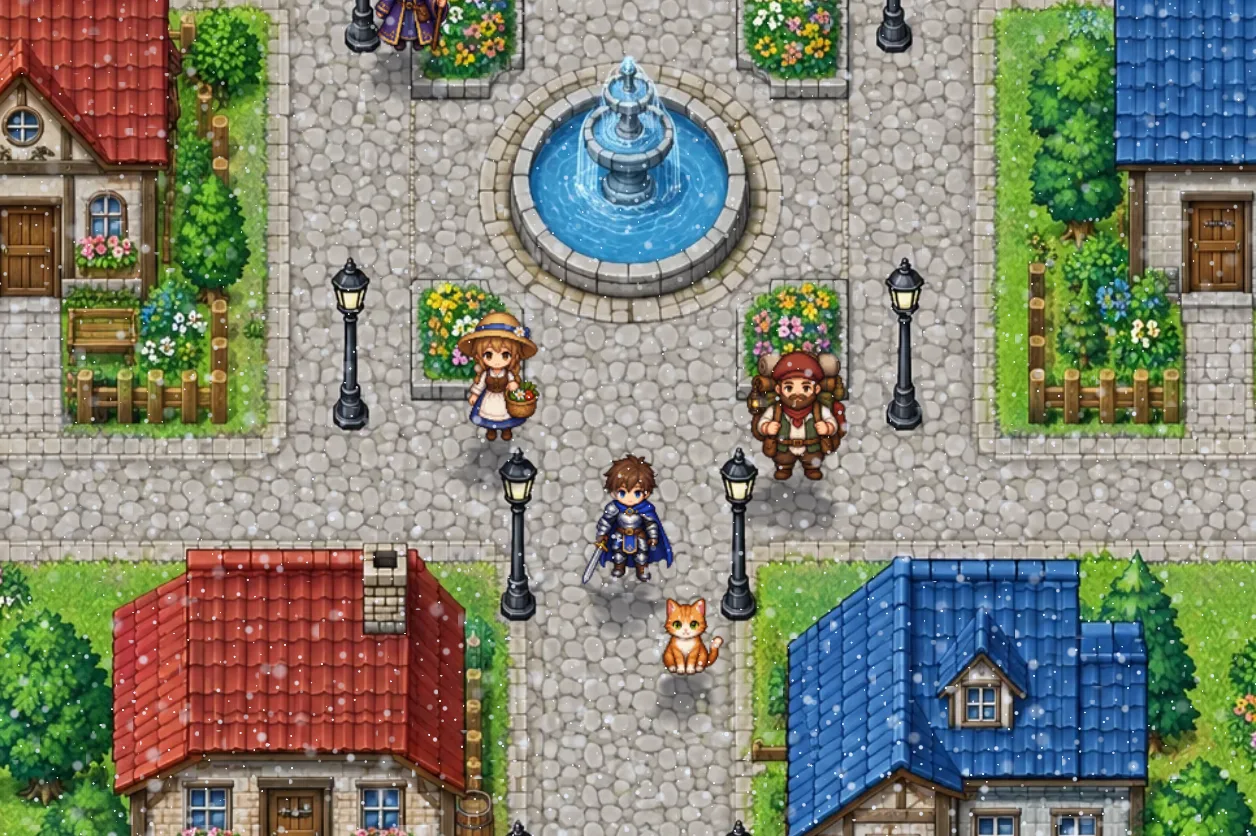
<Weather preset="winterSnow">Same town, new season: switch one preset and the afternoon turns into a snowfall.
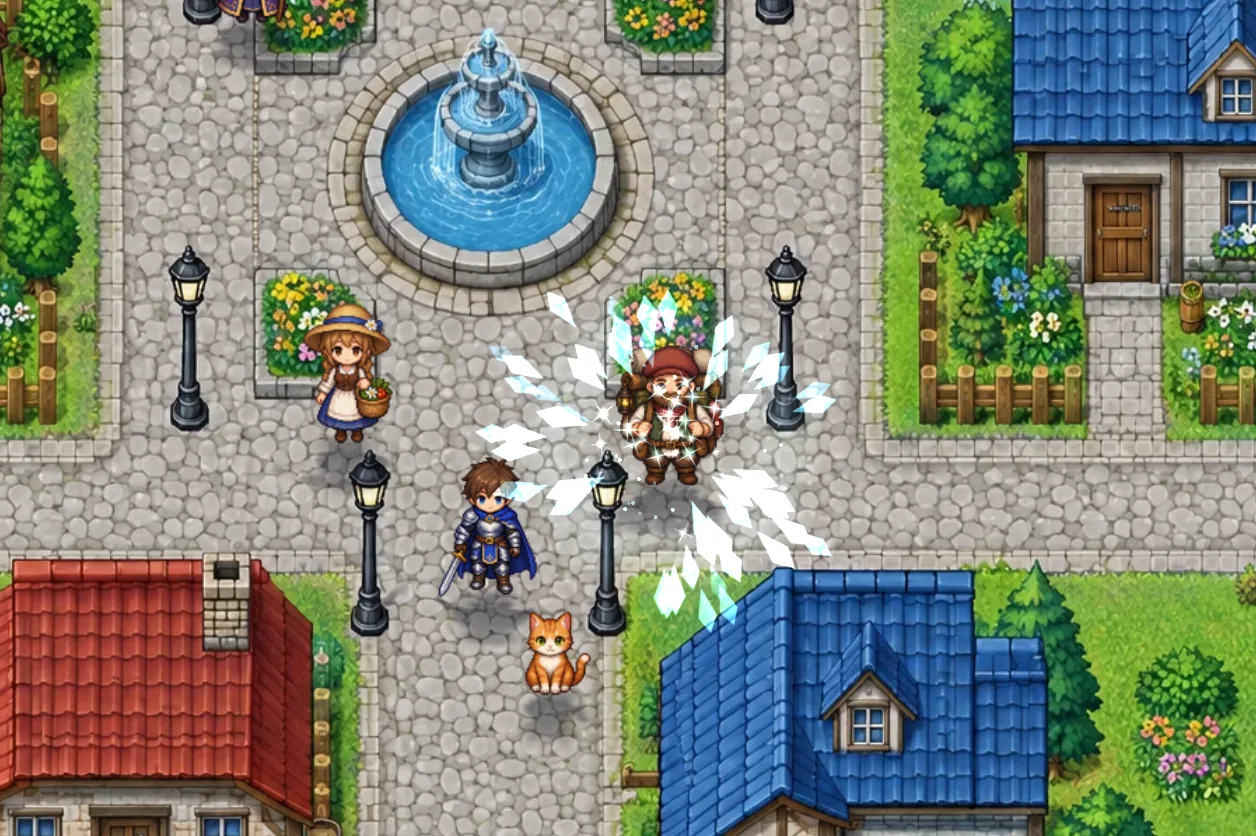
customizeFx()Presets are data: change colors, scale, timing or layers and make them your own.
Where it fits
Same fast WebGL renderer underneath. CanvasEngine adds the missing layer: a component model, reactivity, input, audio, cameras and ready-made game systems.
Scenes are declarative components instead of imperative update code: state lives in signals, the screen follows. Presets bring RPG-grade visuals out of the box.
No editor, no export step: it lives in your Vite + npm stack, mixes freely with HTML UI, and ships as a regular web app.
Try it now
A complete mini-game in one component. Use the arrow keys, then switch to the code view and change anything.
A playable CanvasEngine mini-game.
Works great with AI
Install the CanvasEngine skill and your assistant writes idiomatic .ce scenes, controls, tilemaps and presets instead of guessing.
npx skills add https://github.com/RSamaium/CanvasEngine“Create a top-down RPG village at dusk with a playable knight.”